
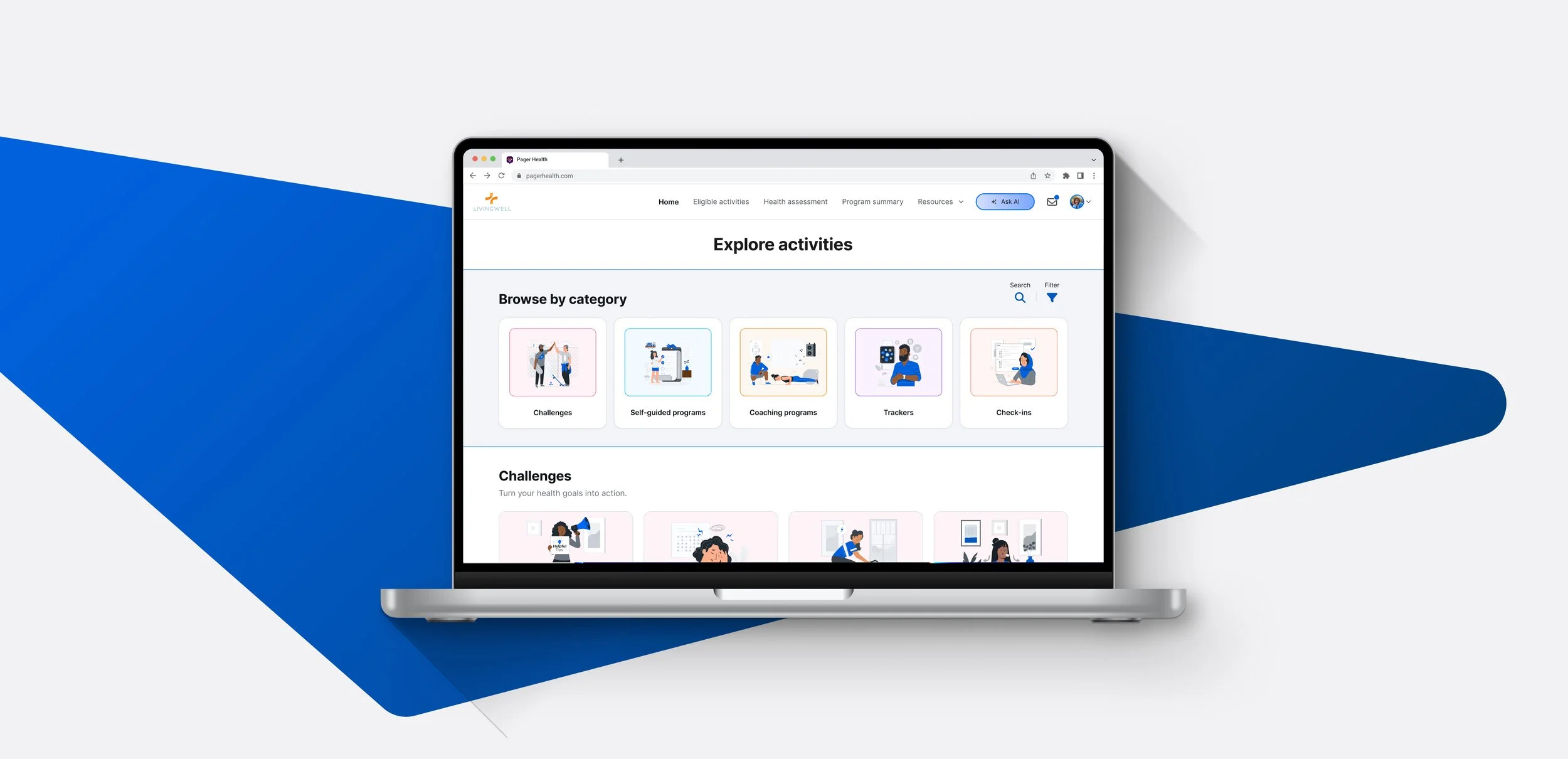
Redesigning discovery: The activity page
The problem
We inherited a platform serving 2M+ members 2.0 App Store rating and an 83% drop-off after day one.
Despite a large, high-quality activity library, members couldn't find a reason to come back.
Wellness platform 2026
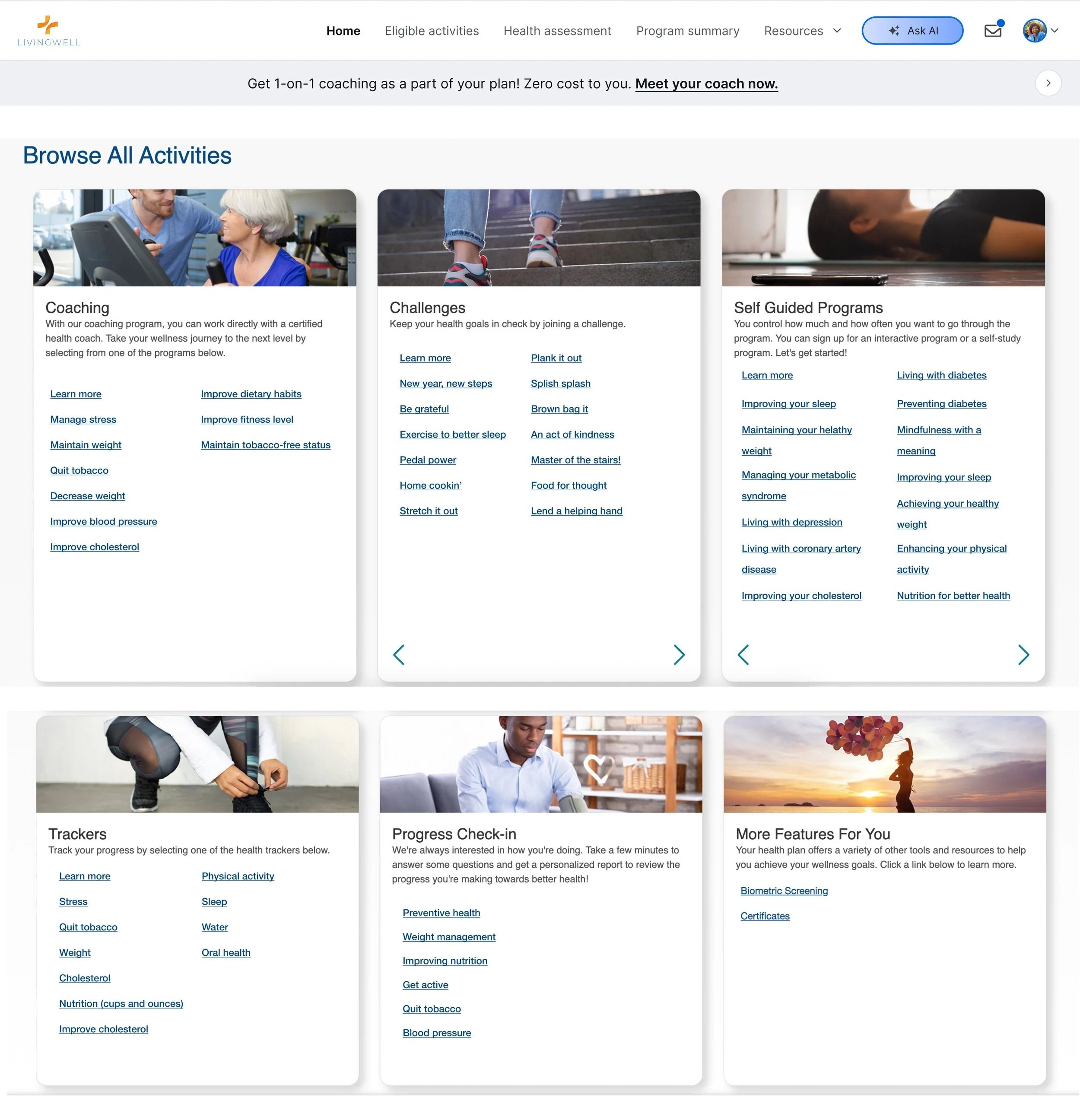
Our starting point
Right now, the activities page overwhelms members instead of helping them discover something meaningful.
What we wanted to achieve
Clarity
Help members understand what matters for their health
Actionability
Recommend, don’t just list
Retention
Give members a reason to return
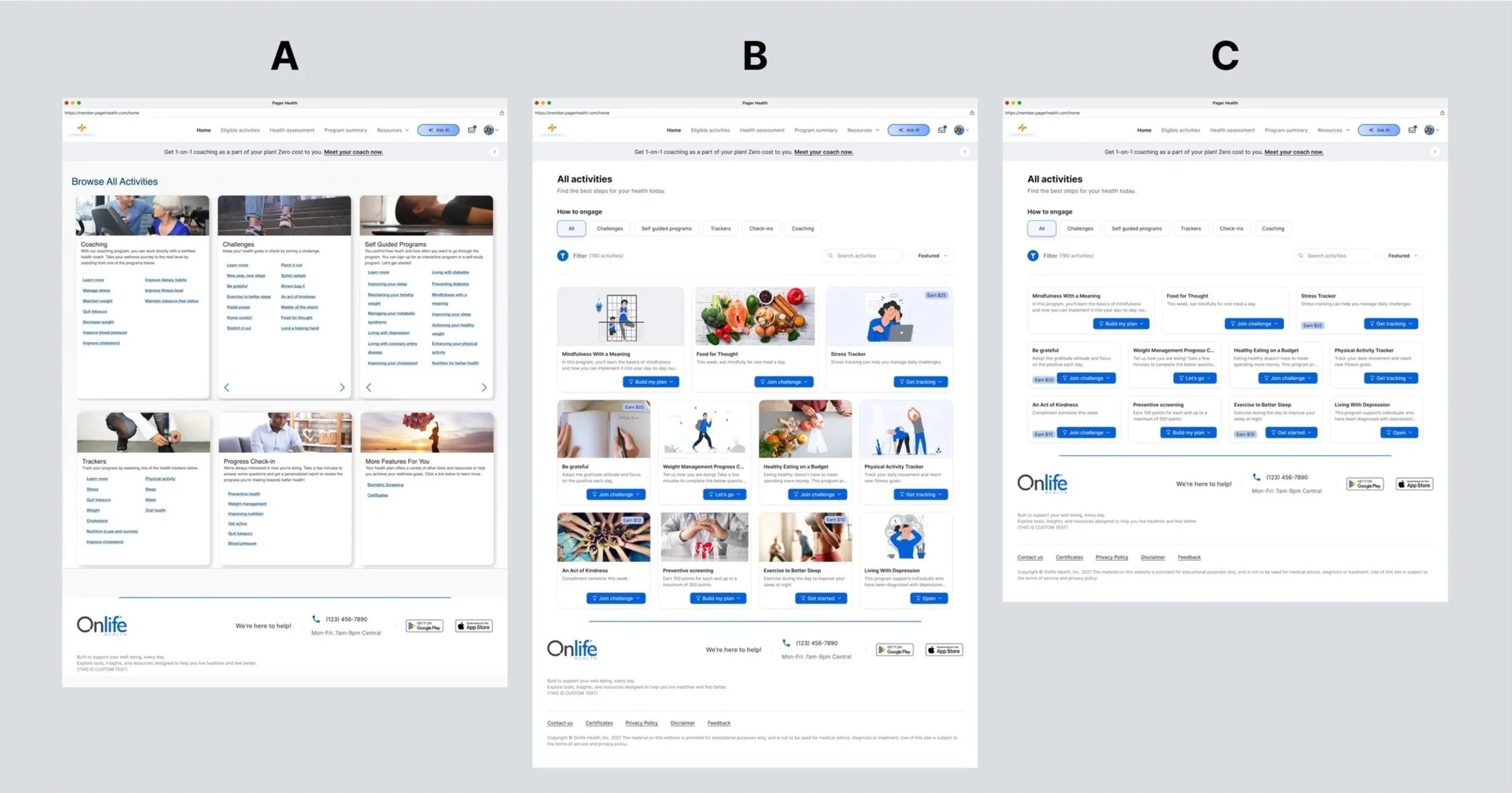
Testing the experiences
Based on 32 interviews in Q1 2026
We expected the legacy experience to be a throwaway baseline. It wasn't. Members responded well to built-in categories but skipped small filters entirely.
Takeaway: Our filter options were not engaging, and we lacked organization.
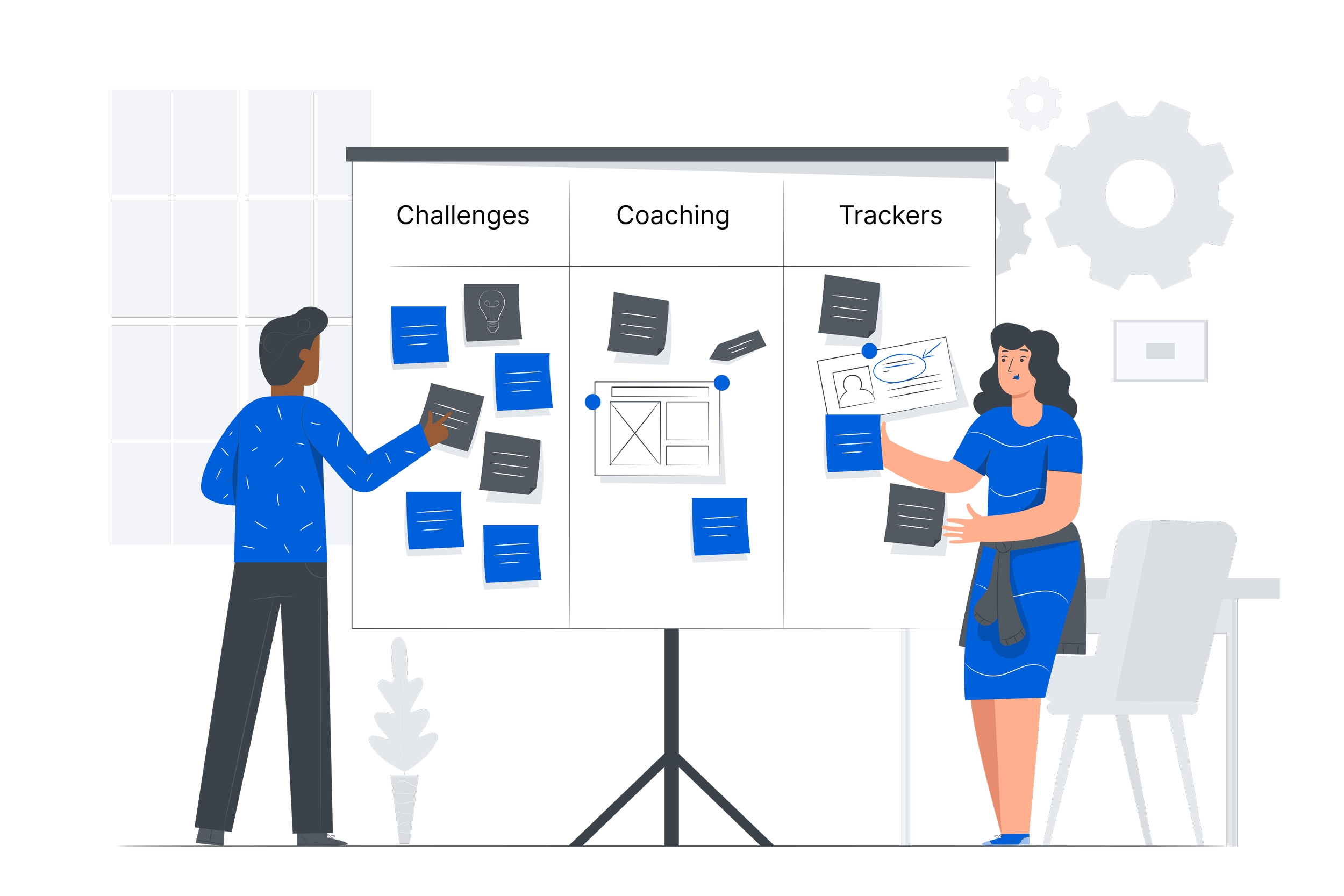
Our research showed users want
-
![]()
Minimal reading
-
![]()
Fun visuals
-
![]()
Smart categories
-
![]()
Color-coded browsing
-
![]()
Search
-
![]()
Filtering

MVP solution
-
Scoped for a major enterprise client, delivered ahead of a June 1, 2026 deadline.
The final solution expanded beyond the original scope, introducing improvements that strengthened the product experience and received positive feedback from the client.
-
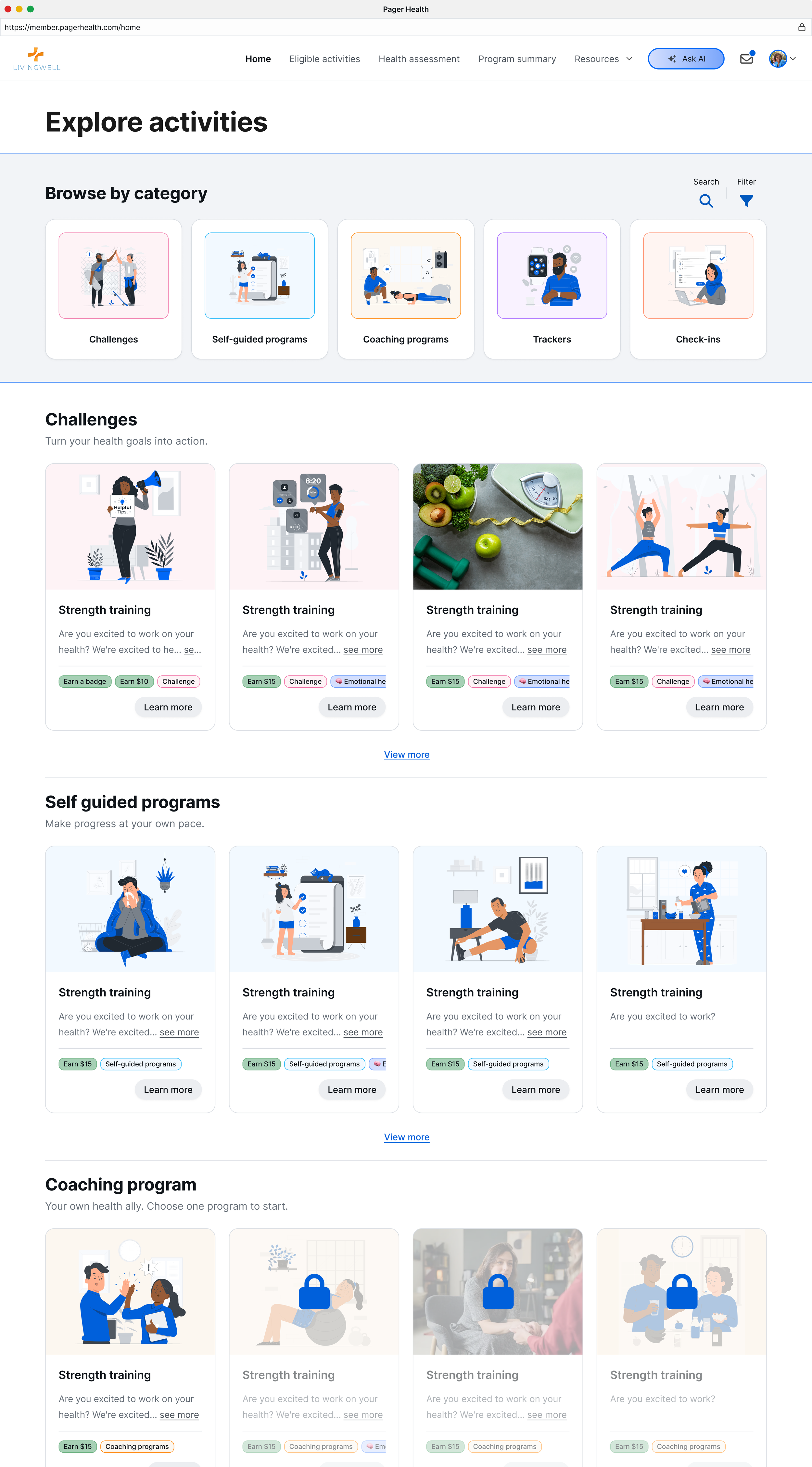
Refreshed visual language: color, illustration, badges, subtext.
-
Search + filtering, consolidating what were previously 3 separate destinations into one.
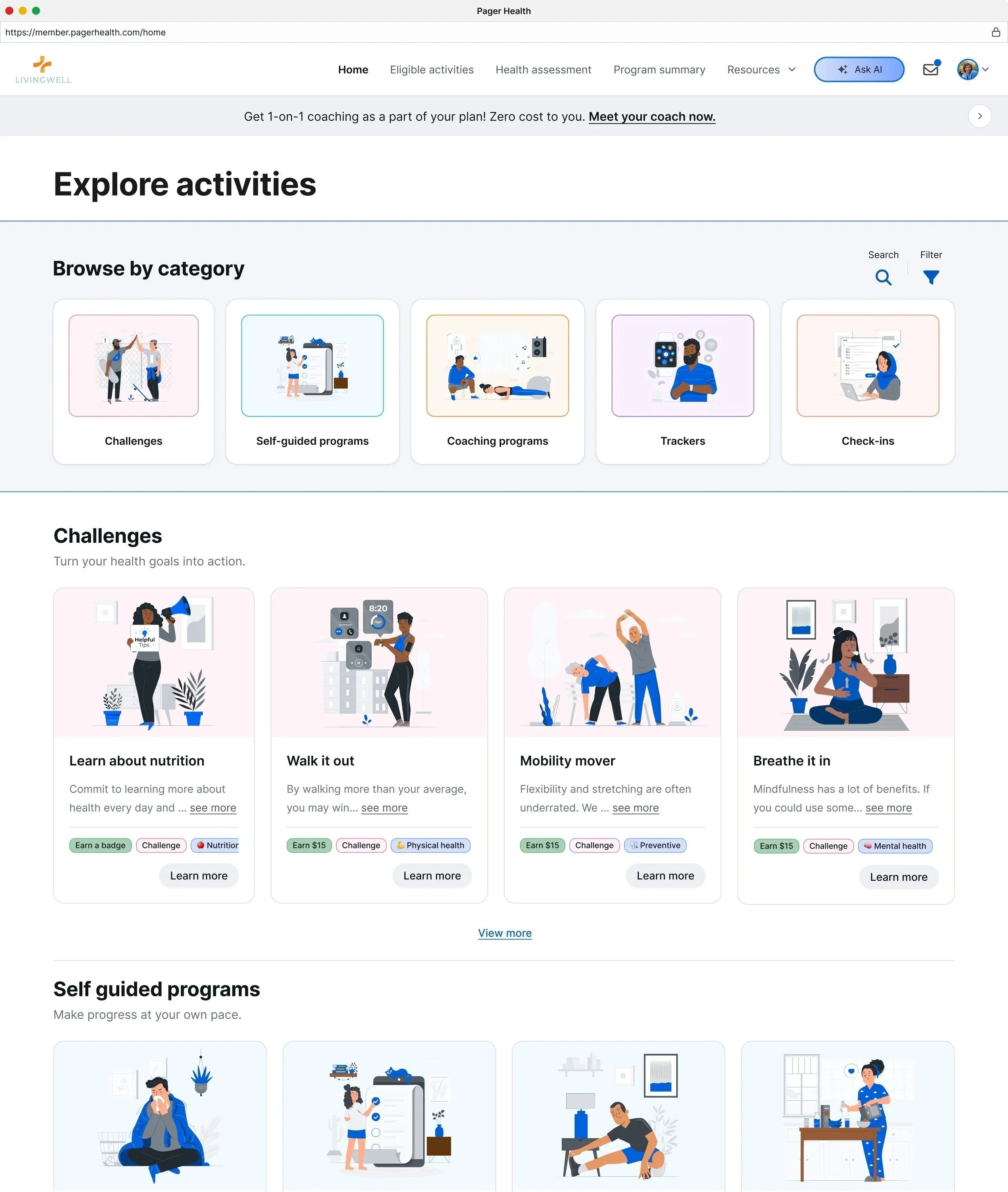
Better organized. Still not personal.
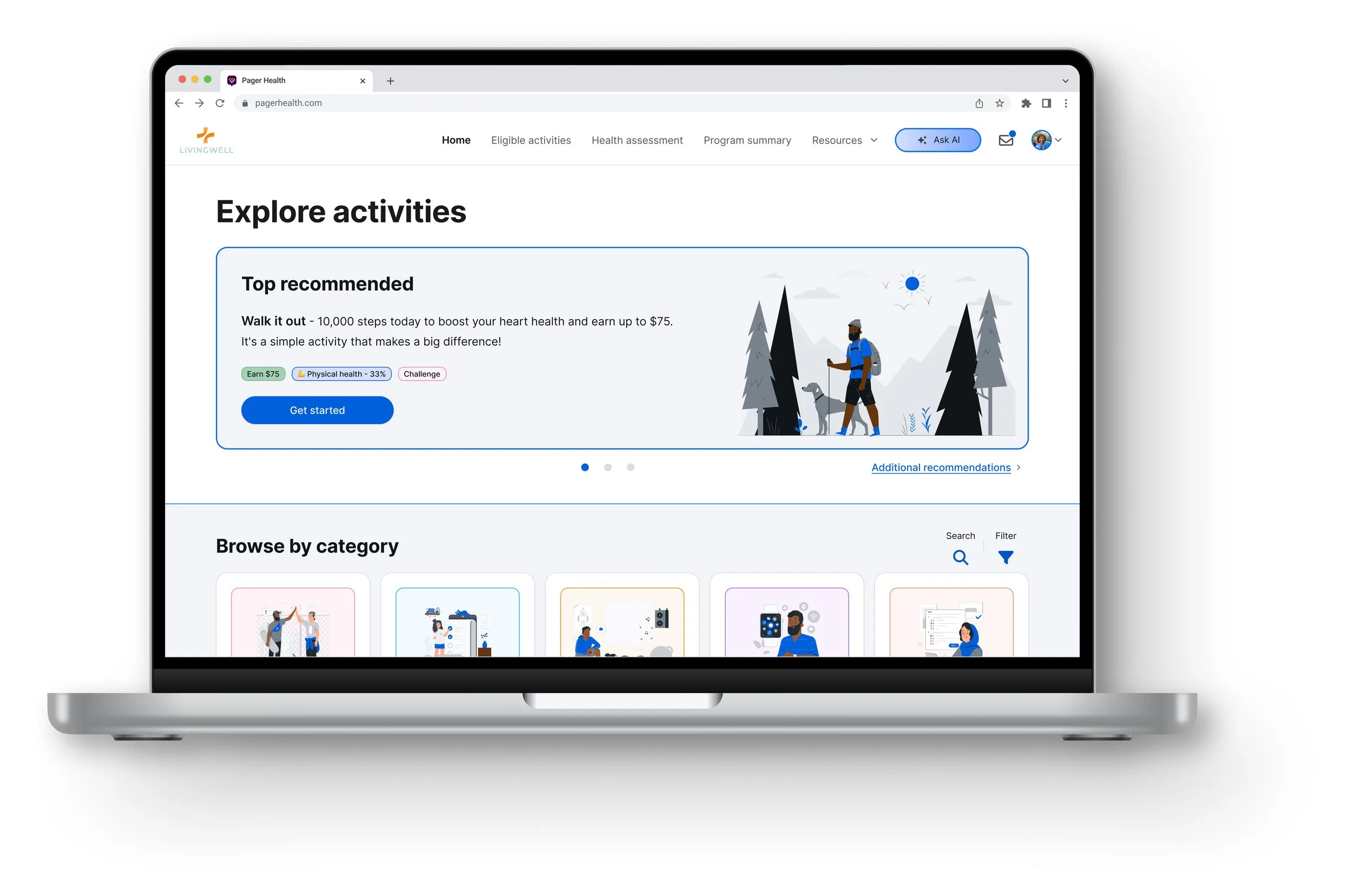
The real insight
Members weren’t looking for more activities.
They were looking for the right next step for their unique health needs.
Engagement cycle
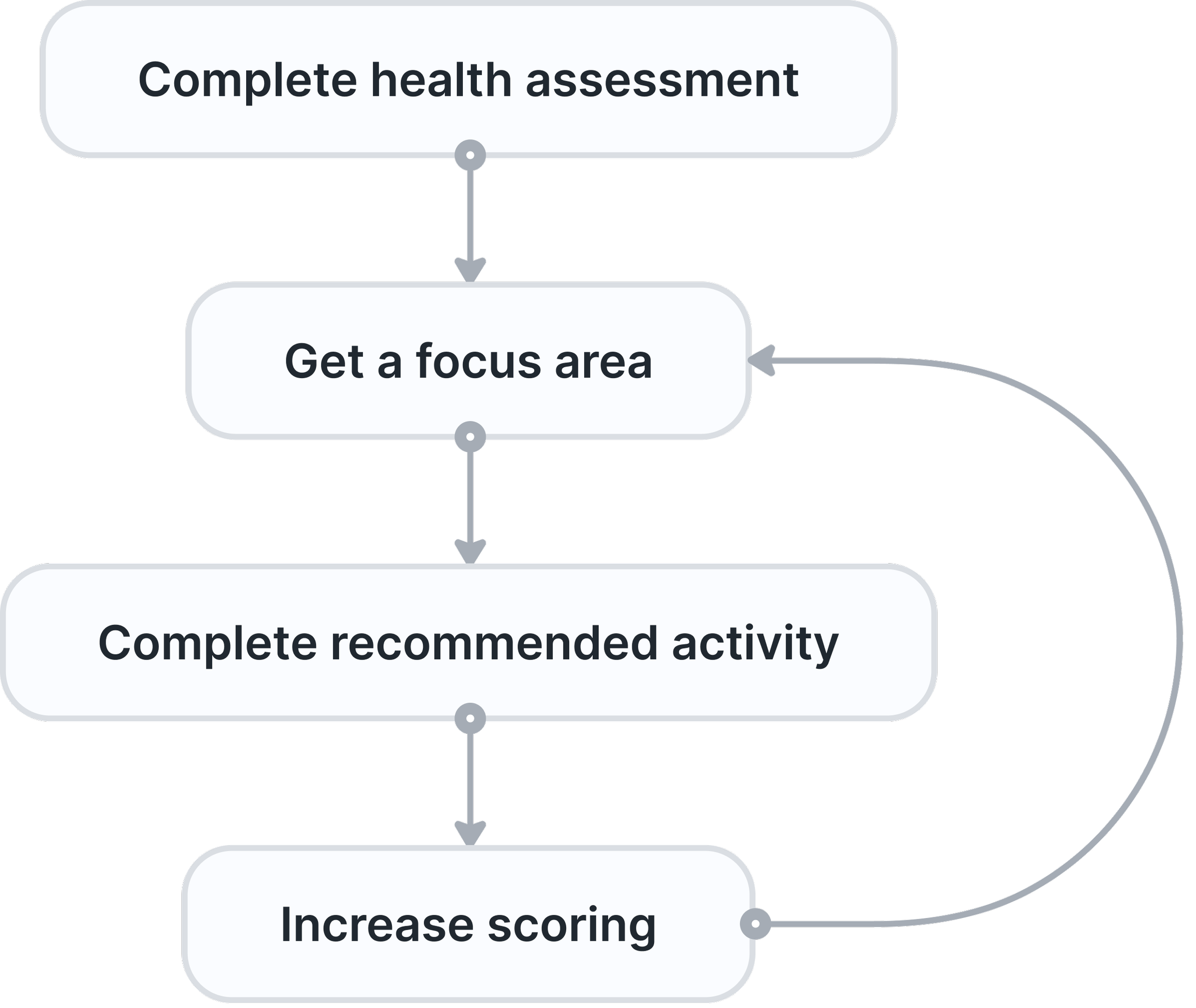
Research phase 2
-
![]()
Option A
-1 focus card
-Scroll down for additional options
-
![]()
Option B
-1 H-scroll focus card
-Focus area filtering + highlighted cards
-
![]()
Option C
-4 focus cards
-Focus area filtering
-
![]()
Option D
MVP design for comparison
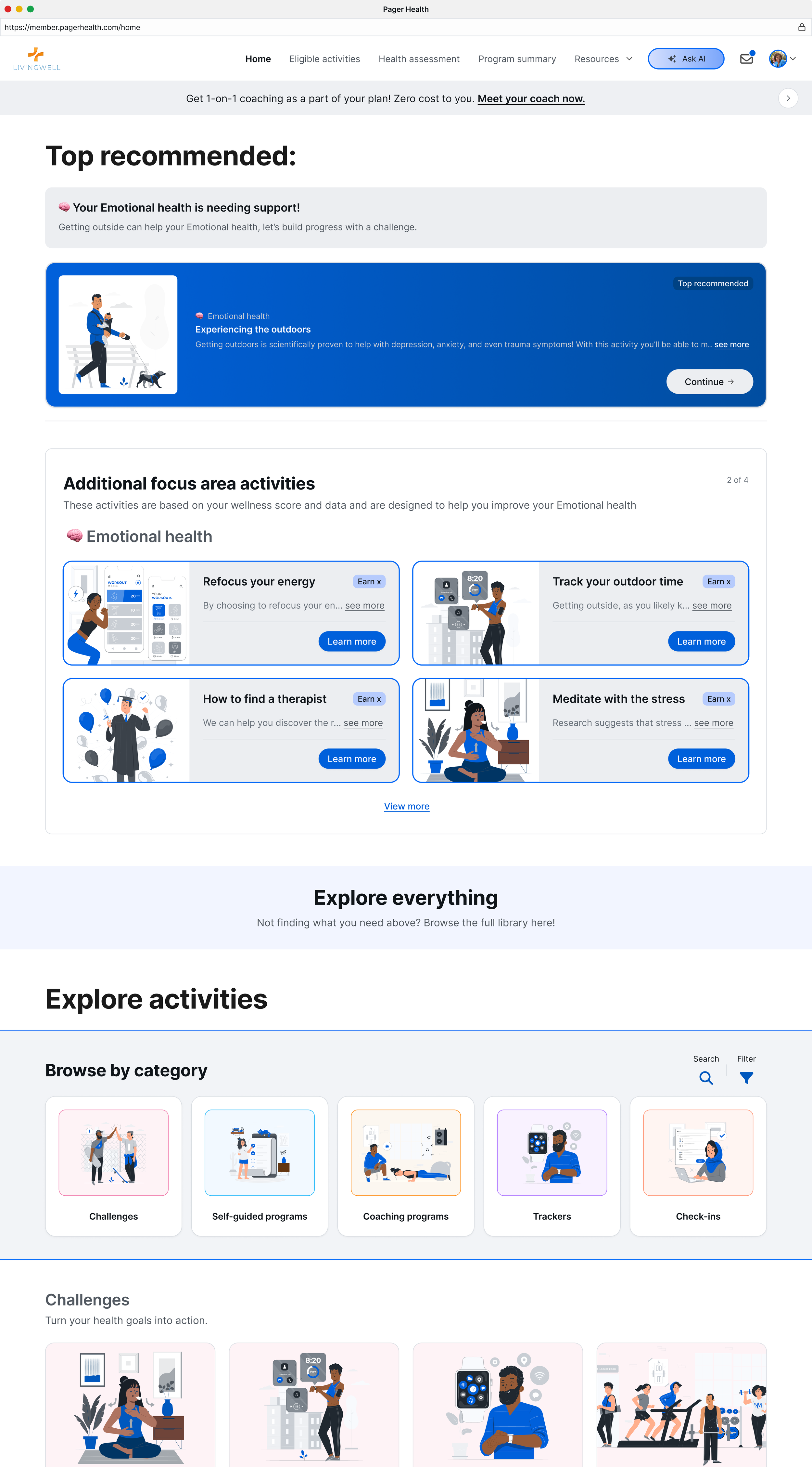
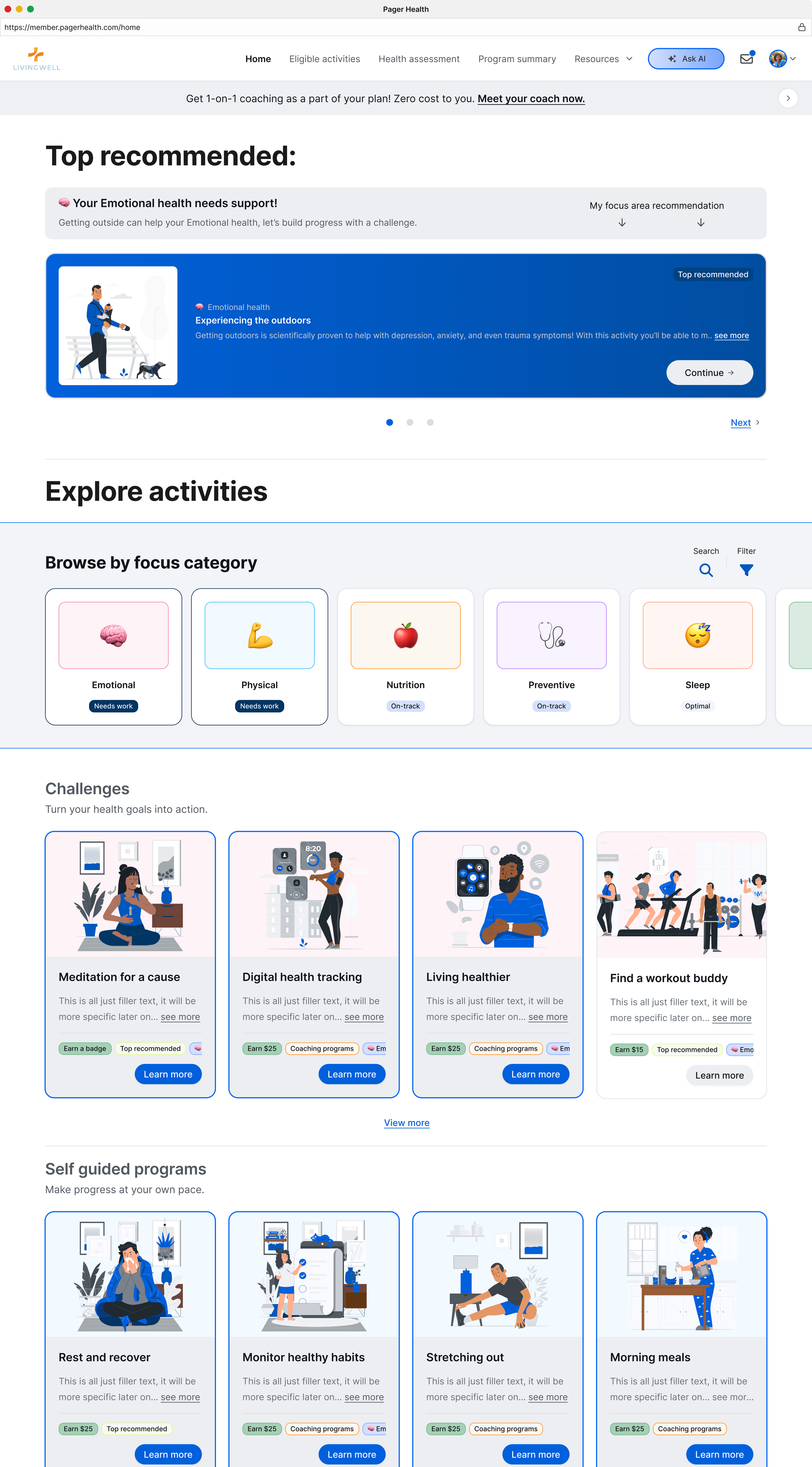
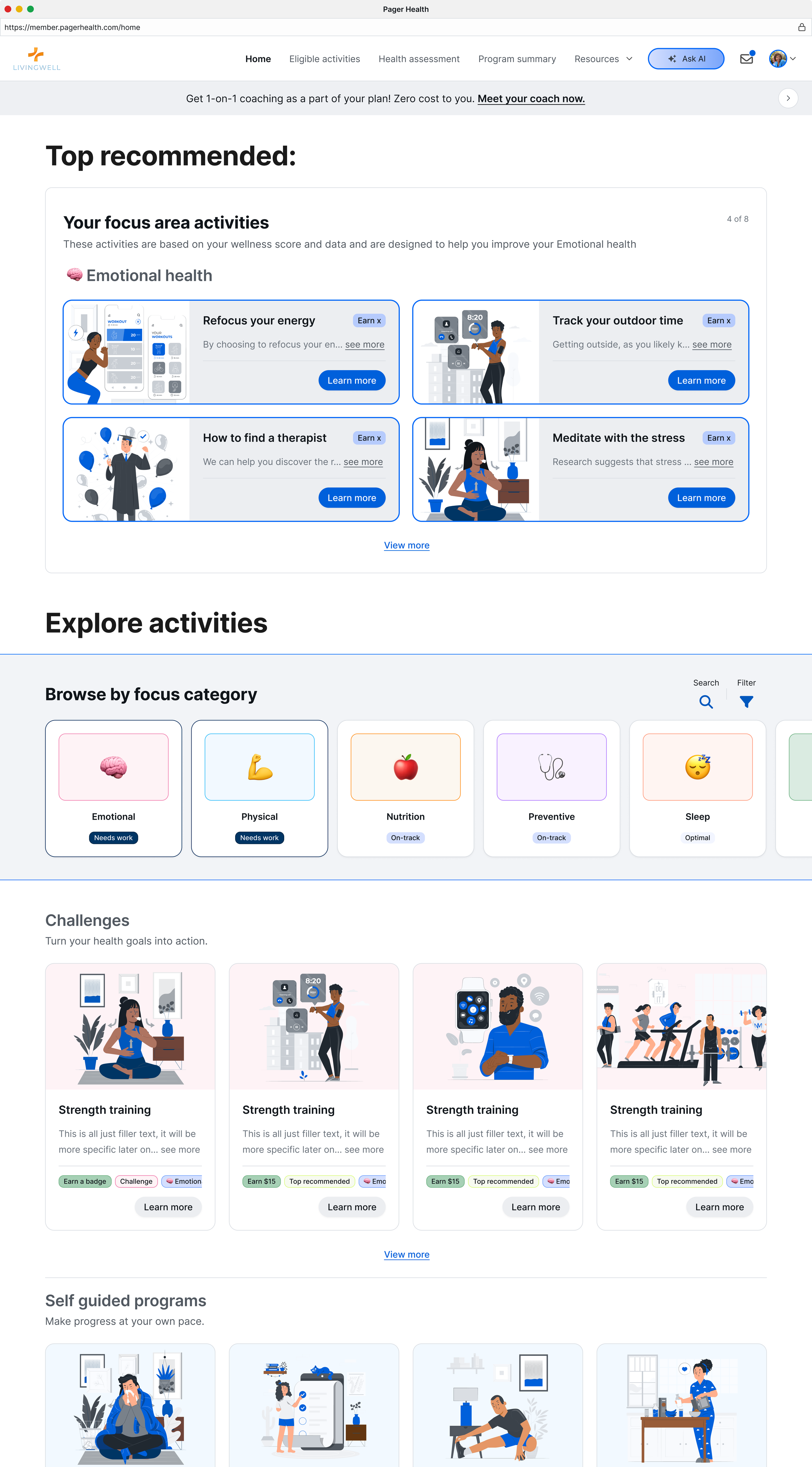
Understanding the research
The numbers pointed one way. Watching people use it told a different story. No single concept won outright.
Users valued different elements across the designs like visual appeal, choice, and guidance, so we combined the strongest pieces of each.

V2 flow + recommendations
Now building for Nov 16, 2026:
Personalization using health assessment content
Readiness-for-change v1 scoped intentionally narrow (reflection + notification impact only, no new data storage)
New filtering and organization for activity page
Impact
Callback
2027 roadmap
Activity click rate since June 1: +42%
App Store rating: Feb 2024 = 2.0 Aug 2026 = 4.0
Early results
V2 release date: Nov 16, 2026
Full analysis on impact pending Q2 2027 review
The goals we set on day one:
Clarity, actionability, retention
Full readiness-for-change model: Recommend based on confidence/readiness responses and let members pick their own focus area, even if it's not their highest-risk one
Recommendation logic expanding beyond activities to coaching, check-ins, trackers
Design system extending to Profile, Settings, Check-ins flagged as currently disjointed

How it was built
💁♀️ Jeni as design lead and strategy owner for the wellness platform
PM, eng. lead, researcher, copy writer, customer success team, and marketing team collaboration
🎨 Figma designs (custom design system)
🤖 Iterative support (Claude)
💻 Code-backed components (Shadcn)
🕺 Illustration library (Storyset)
🩸 Blood, sweat + tears
Thank you!
Any questions?